The Software Development Lifecycle (SDLC) Explained - From Idea to Scalable Software
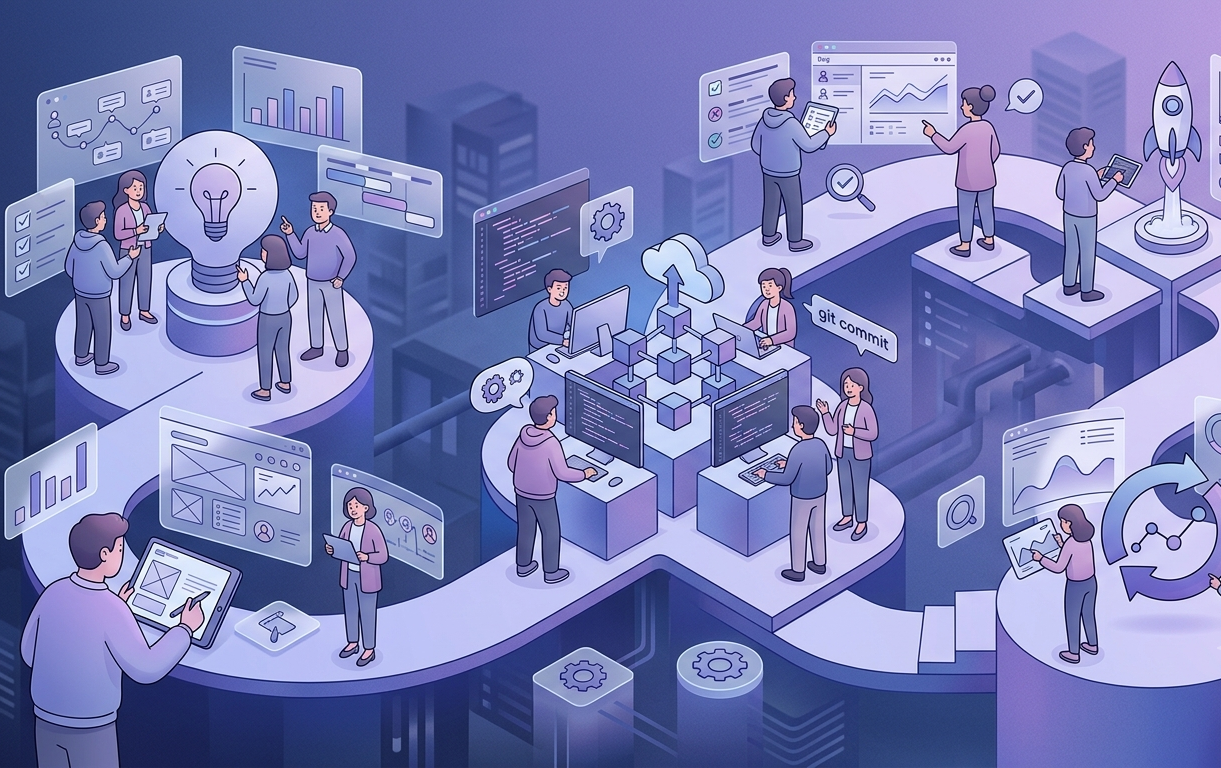
Every successful software product begins with an idea.
A company identifies a problem. A team imagines a solution. A business owner sees an opportunity to improve an existing process. At this early stage, everything feels simple: just build the product, launch it, and let users benefit from it.
But transforming an idea into reliable software is far more complex than writing code.
Behind every successful application is a structured journey involving research, planning, design, development, testing, deployment, and continuous improvement. Without a clear process, software projects often become unpredictable. Requirements change without direction, development becomes inefficient, budgets increase, and teams struggle to deliver the expected outcome.
This structured process is known as the Software Development Lifecycle (SDLC).
The SDLC provides a framework for transforming ideas into functional, reliable, and maintainable software. It helps teams reduce risks, improve collaboration, and ensure that the final product solves the actual problem it was designed for.
Whether building a mobile application, enterprise system, website, or complex digital platform, understanding the software development lifecycle is essential for creating software that succeeds beyond the initial launch.
What Is the Software Development Lifecycle (SDLC)?
The Software Development Lifecycle is a systematic process used by software teams to plan, create, test, deploy, and maintain software applications.
Instead of treating software development as one large task, SDLC breaks the process into clear stages. Each stage has a specific purpose and contributes to building a better final product.
The lifecycle helps answer important questions:
- What problem are we solving?
- Who will use this software?
- What features are actually needed?
- How should the system be designed?
- How do we ensure quality?
- How will the software evolve after launch?
A common misconception is that SDLC is a rigid, linear process where teams complete one stage and never return to it. Modern development approaches are more flexible. Agile teams often move between stages repeatedly, improving the product based on feedback and changing requirements.
The goal of SDLC is not simply to follow steps. The goal is to create a reliable system for turning ideas into valuable software.
Stage 1: Discovery and Requirement Analysis
The first stage of software development is not coding. It is understanding.
Many software projects fail because teams start building before they fully understand the problem. They focus on features rather than outcomes and create products that technically work but fail to solve the user's real needs.
The discovery phase focuses on answering fundamental questions:
- What problem does the software solve?
- Who are the target users?
- What business goals should it achieve?
- What features are essential?
- What technical requirements exist?
During this stage, teams collaborate with stakeholders to collect requirements and define the project's direction.
This may involve:
- User research
- Market analysis
- Competitor analysis
- Business requirement gathering
- Technical feasibility studies
A strong discovery process prevents expensive mistakes later. Changing a requirement during planning is simple. Changing the same requirement after months of development can be extremely costly.
Great software begins with clarity.
Stage 2: Planning and Project Strategy
Once requirements are understood, teams begin creating a roadmap for development. Planning transforms ideas into an actionable strategy.
At this stage, teams define:
- Project scope
- Timeline expectations
- Required technologies
- Development resources
- Budget considerations
- Potential risks
Technical teams also evaluate architectural decisions. They determine whether the software should use specific frameworks, databases, cloud services, or infrastructure approaches.
This stage creates alignment between business goals and technical execution.
Without proper planning, software projects often suffer from scope creep, where additional features continuously appear without considering their impact on time, cost, or complexity.
A successful project is not built by adding everything possible. It is built by prioritizing what creates the most value.
Stage 3: Software Design and Architecture
Before developers write code, the software needs a blueprint.
The design stage defines how the system will work, how users will interact with it, and how different components will communicate.
This stage includes two major areas:
User Experience Design
UX design focuses on understanding users and creating interfaces that are intuitive, efficient, and enjoyable.
Designers consider:
- User journeys
- Navigation structure
- Interface layouts
- User interactions
- Accessibility
A product can have excellent technology but still fail if users struggle to understand or use it.
Technical Architecture
Software architecture defines the foundation of the system.
It determines:
- How components interact
- How data flows through the system
- How the application will scale
- How security is handled
- How future features can be added
Strong architecture creates flexibility. Poor architecture creates limitations that become increasingly expensive as the software grows.
The decisions made during this stage influence the entire future of the product.
Stage 4: Development and Implementation
This is the stage most people associate with software development: writing code.
Developers transform designs and technical plans into a working application. However, development is not simply about producing lines of code.
Professional development involves:
- Writing maintainable code
- Following engineering standards
- Reviewing code quality
- Managing version control
- Collaborating across teams
- Building scalable solutions
Modern software teams often work in smaller development cycles, continuously integrating improvements rather than waiting until the entire product is finished. This allows teams to detect problems earlier and adapt quickly.
Good developers do not only ask: "How can we make this feature work?"
They ask: "How can we build this feature so it remains reliable as the product grows?"
Stage 5: Testing and Quality Assurance
Software that works on a developer's computer is not necessarily ready for users. Testing ensures that the application performs correctly, securely, and consistently.
Quality assurance teams and developers evaluate the software through different testing methods:
Functional Testing
Ensures features behave according to requirements.
Performance Testing
Measures how the system handles different levels of usage.
Security Testing
Identifies vulnerabilities and protects user data.
User Acceptance Testing
Confirms that the software meets user expectations.
Testing is not a final step added at the end. The best development teams consider quality throughout the entire lifecycle.
Finding problems early saves time, money, and frustration.
Stage 6: Deployment and Release
After development and testing are complete, the software is ready to reach users.
Deployment involves moving the application into a production environment where customers can access it.
This stage includes:
- Server configuration
- Database setup
- Security checks
- Release management
- Performance monitoring
Modern software teams often use automated deployment pipelines that allow faster and safer releases. However, launching software is not the end of development.
It is the beginning of the next phase.
Stage 7: Maintenance and Continuous Improvement
Software is never truly finished. After launch, users provide feedback, business needs change, and technology continues evolving. The maintenance phase focuses on keeping the software reliable and improving it over time.
This includes:
- Fixing bugs
- Improving performance
- Adding new features
- Updating security measures
- Adapting to new requirements
Successful software products are not built once and abandoned. They evolve.
Companies like the most successful digital platforms understand that continuous improvement is what keeps products valuable over years.
Different SDLC Models
The Software Development Lifecycle can be implemented using different approaches depending on the project's needs.
Waterfall Model
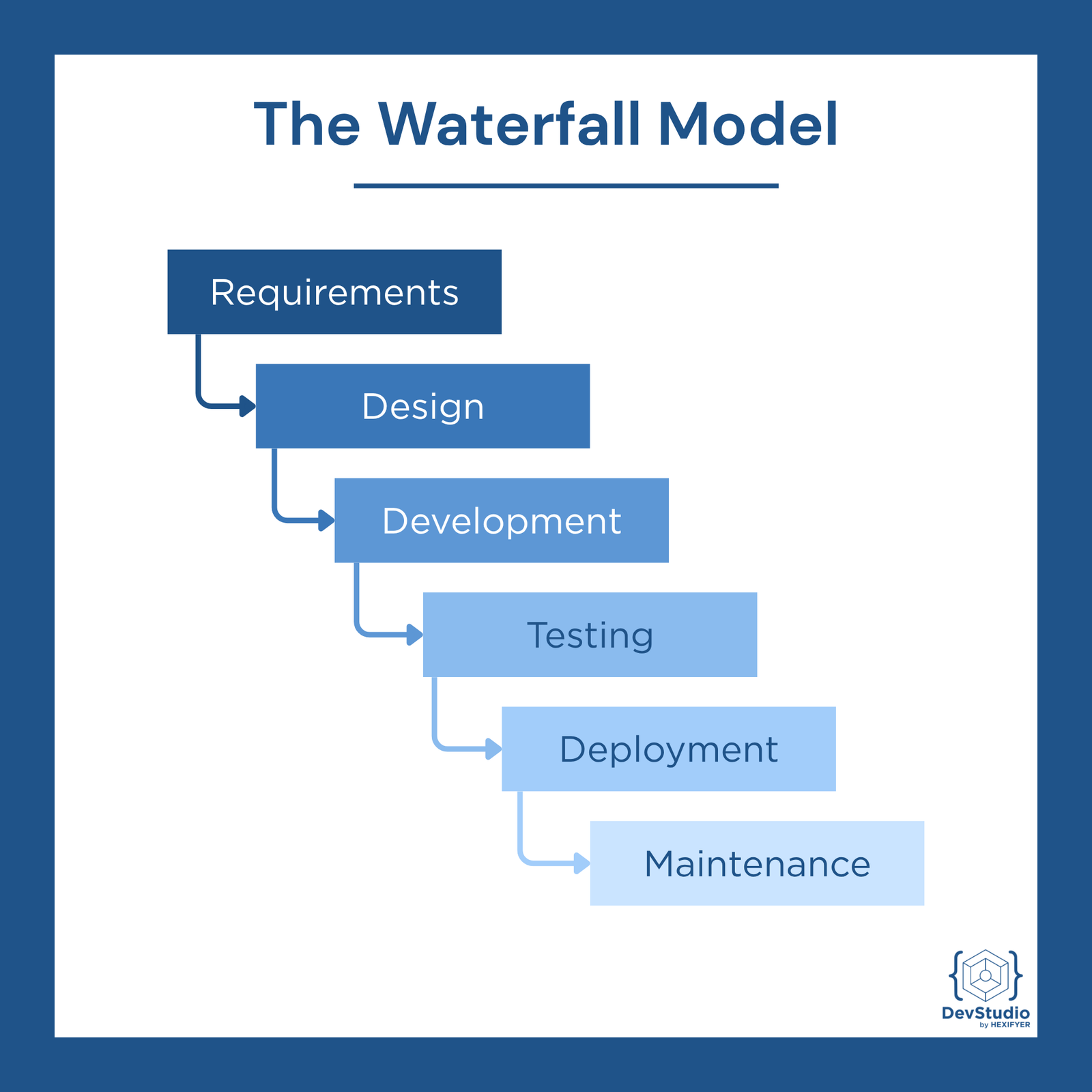
The traditional Waterfall approach follows a sequential process. Each stage is completed before moving to the next.
It works well for projects with very stable requirements but can struggle when changes are expected.
Agile Model
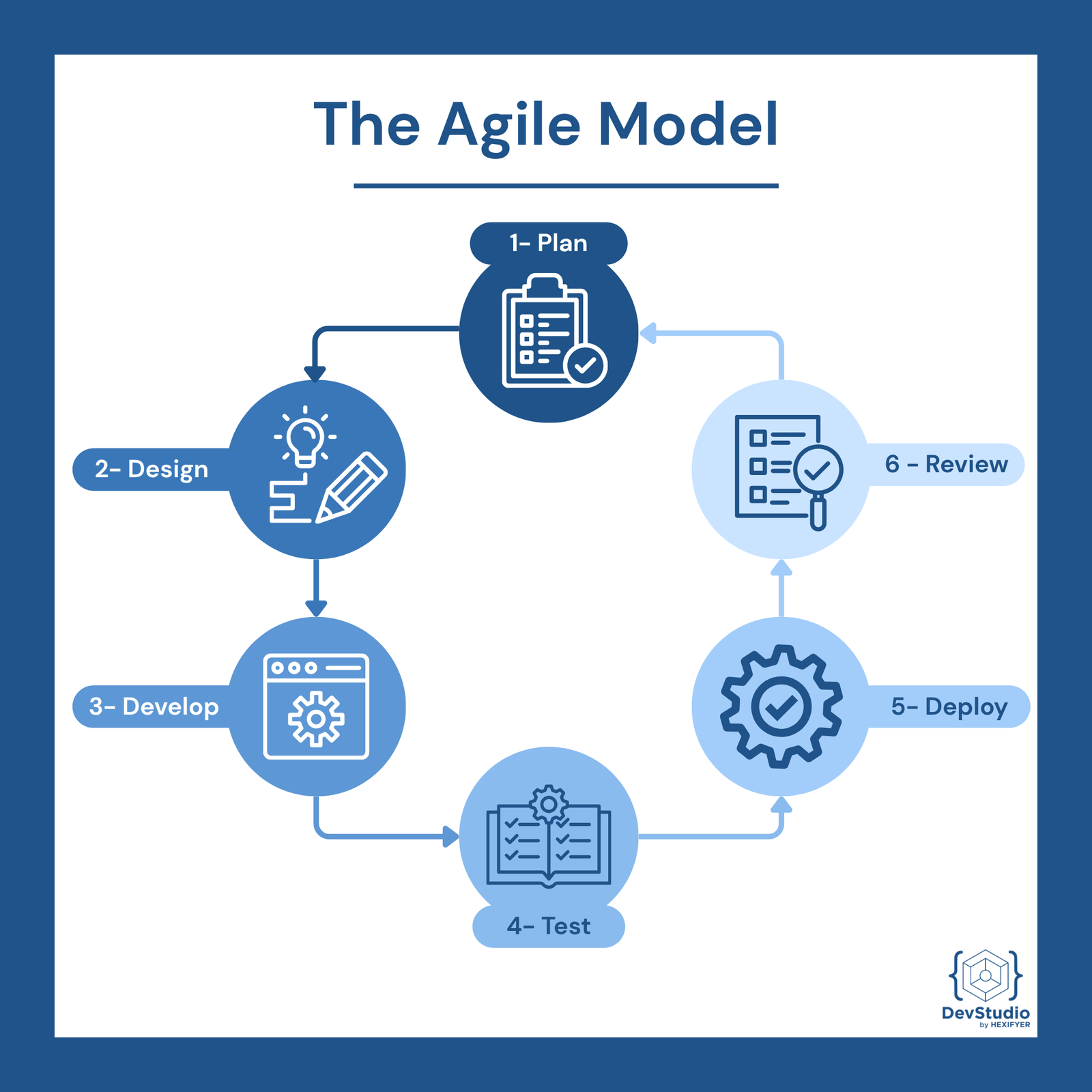
Agile focuses on flexibility, collaboration, and continuous improvement.
Teams develop software through smaller iterations, gathering feedback and adapting throughout the process.
DevOps Model
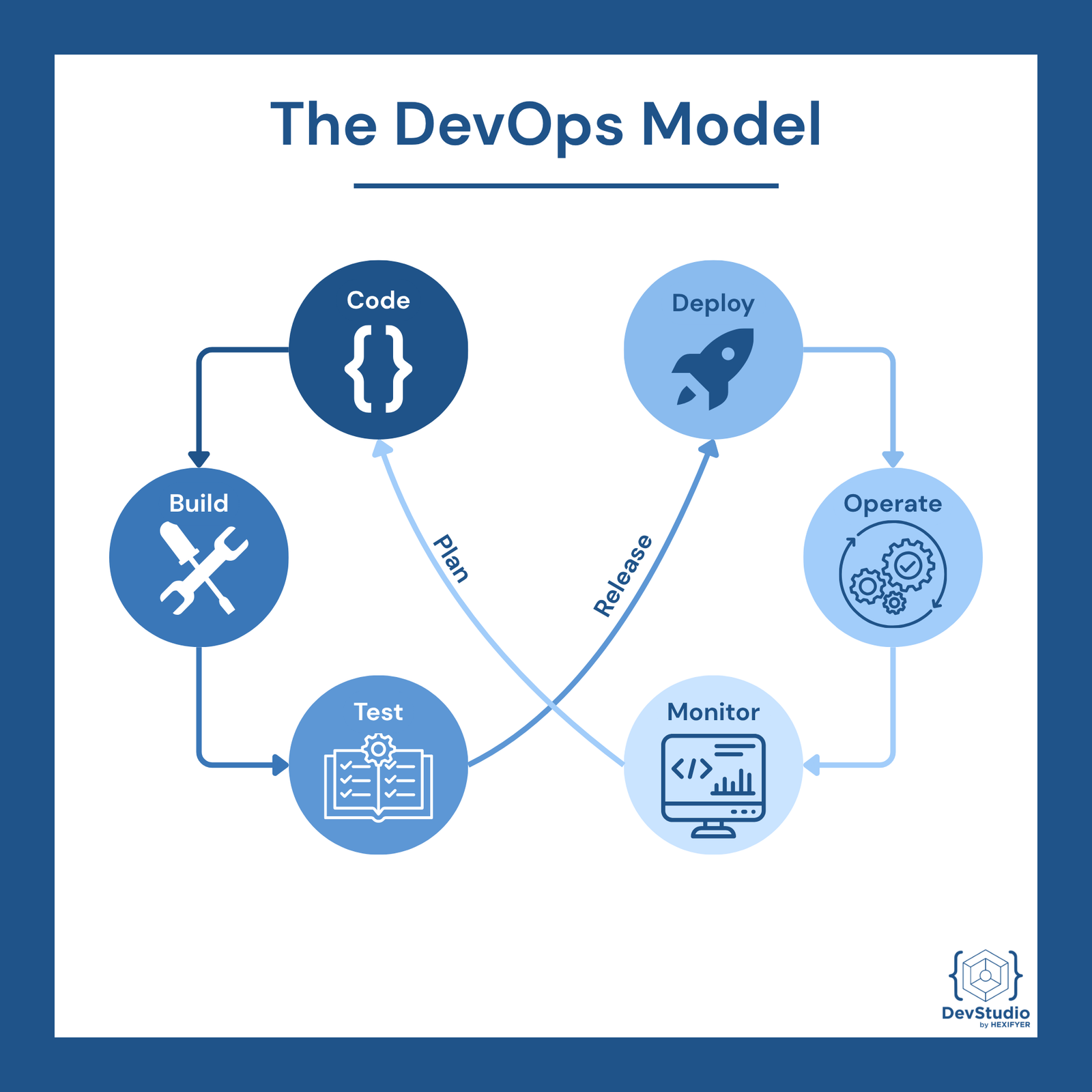
DevOps combines development and operations to improve collaboration, automation, and faster delivery.
It focuses on creating a continuous cycle of development, deployment, monitoring, and improvement.
Choosing the right approach depends on the project's complexity, requirements, and business environment.
Why a Strong Development Process Matters
A structured software development lifecycle provides more than organization.
It creates confidence.
For businesses, it means:
- Better control over costs
- Reduced technical risks
- Higher software quality
- Faster problem detection
- Easier future expansion
For development teams, it creates:
- Clear responsibilities
- Better communication
- More predictable workflows
- Improved collaboration
The difference between average software and exceptional software is often not the technology itself.
It is the process behind building it.
Final Thoughts
Software development is not simply about writing code.
It is a journey of understanding problems, designing solutions, building reliable systems, and continuously improving them.
The Software Development Lifecycle provides the structure needed to transform uncertain ideas into successful digital products.
From the first discovery conversation to years of maintenance after launch, every stage plays a role in creating software that delivers real value.
Great software is not created by accident. It is built through a thoughtful process, strong engineering practices, and teams that understand both technology and the people using it.
Build Software With a Process Designed for Success
Turning an idea into successful software requires more than developers writing code. It requires strategy, design, engineering discipline, and a development process that keeps the project aligned from start to finish.
At DevStudio, we help businesses transform ideas into scalable digital solutions through a structured software development approach. From discovery and UX design to architecture, development, testing, and long-term improvement, we build software designed around real business goals.
Whether you are creating a new product, improving an existing system, or developing a custom solution for your organization, DevStudio provides the expertise and process needed to move from concept to reality.
Build your next digital product with DevStudio.